Turkey is the 11th largest economy in the world. It’s a member of G20, a group of countries with the strongest economies. The volume of the Turkish economy is impressive as it is but the most exciting fact for an international investor is that it continues growing at a rapid pace. It is not surprising that many foreigners are putting money into Turkey in view of the fact that the local government offers some highly inviting conditions to them.

Why consider investing in Turkey?
Investing in Turkey is worth considering for the following main reasons:
- Unique location. Turkey has a unique geographical position: it bridges Europe and Asia. This grants it access to vast markets across Europe, the Middle East, North Africa, and Central Asia. This strategic location makes organizing the logistics and supply chains easier for foreign companies. Besides, it reduces both transit time and transportation costs. In addition, Turkey has demonstrated remarkable resilience in the face of economic crises, managing to sustain stable growth even during global economic turbulence. Over recent years, the country has drawn significant international investment thus making its economic standing on the world stage even more solid.
- Government incentives for foreign investors. Turkey has developed an array of support programs specifically aimed at foreign investors. Depending on the industry and region, businesses can benefit from tax breaks, equipment subsidies, and they can even buy land plots at preferential terms. Such incentives are especially targeted towards high-tech sectors, industrial production, and real estate. The Turkish government actively promotes foreign investment by creating favorable conditions for businesses to launch quickly and start bringing profits soon.
- Low costs and a skilled workforce. Turkey stands out for its combination of moderate labor costs and a well-qualified workforce across various fields. Wage levels are lower there than in Western Europe, which allows businesses to reduce personnel expenses without compromising on work quality. Moreover, Turkish universities turn out thousands of skilled professionals every year and they are ready to contribute to modern, tech-driven businesses.
Key sectors for investment in Turkey
Many sectors of the Turkish economy have high potential for revenue and sustainable growth. The country actively attracts capital to its strategic industries, such as real estate, the stock market, tourism, and energy. Not only do these sectors offer profitable returns, but they also receive government support that makes investments more stable and returns more predictable.
The real estate market and property ownership
The real estate market in Turkey steadily draws foreign investors thanks to its broad opportunities for income generation and the chance to obtain Turkish citizenship.
- Obtaining citizenship by investment in real estate. Turkey offers a program that allows foreigners to obtain citizenship by purchasing property that is worth at least $400,000. This adds to the appeal of investing in housing, as it provides the right to reside and conduct business in the country Besides, a Turkish passport gives visa-free access to numerous countries.
- Top cities for investment and projected returns. Istanbul, Antalya, and Bodrum are among the most attractive cities for investors. Istanbul remains the economic and cultural heart of the country and the demand for real estate is steady there. This fact promises high rental yields. Antalya and Bodrum are magnets for tourists, which makes them ideal for investing in rental and resort properties.
We can offer many exciting investment options if you’re interested in putting money in Turkish real estate.
Stock market and financial instruments
The Turkish stock market, represented by Borsa Istanbul, is also appealing to foreign investors. It offers access to assets of rapidly growing Turkish companies together with various options for capital diversification.
Borsa Istanbul offers various investment options to foreigners, including stocks, government bonds, and mutual funds. Foreign nationals can easily open a brokerage account and start investing in Turkish companies. This will allow them to benefit from the growth of local markets and steady returns.
Tourism sector
Tourism is one of the most dynamically developing sectors in Turkey: the country draws millions of visitors each year. This creates excellent opportunities for investors interested in resort infrastructure and the hospitality industry.
- Investments in hotels, resorts, and ecotourism. Investing in hotels, resorts, and ecotourism is becoming increasingly popular due to high tourist demand. The Turkish government strongly supports the development of this industry, particularly the ecotourism segment, and this makes it an attractive option for investors focused on sustainable development.
Energy sector and renewable energy sources
Energy, and especially renewable sources, is one of the most promising areas for investment. Turkey is actively advancing its solar and wind energy sectors. It offers tax breaks and subsidies to foreign investors under the government’s program of transition to green energy.
- Green energy projects and government subsidies. Foreign investors have the opportunity to participate in projects for building solar and wind power plants. These enterprises receive substantial tax incentives and subsidies.
These key sectors show stable growth and receive government support, which makes them ideal for foreign investments.
Citizenship of Turkey by investment
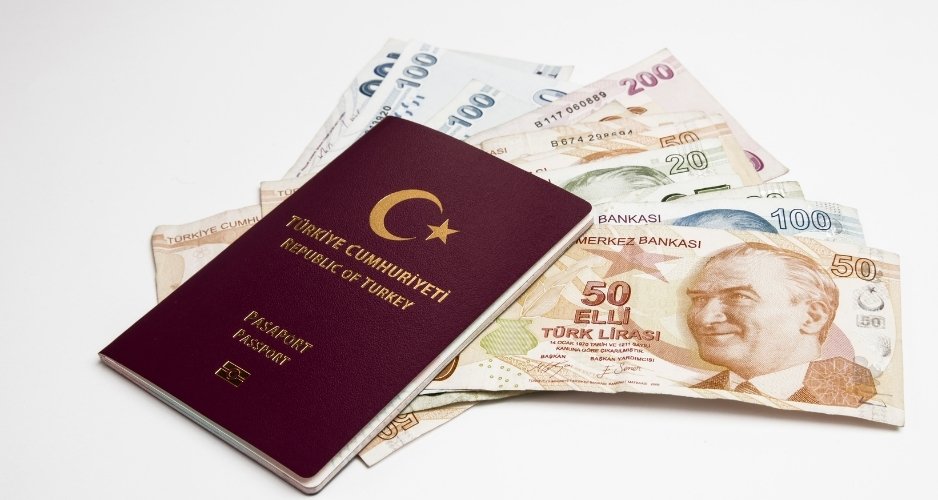
Turkey's citizenship-by-investment program offers foreign investors a chance to obtain a Turkish passport along with all associated rights upon meeting some specific requirements. This process is straightforward and it takes a relatively short time.
Requirements for obtaining citizenship by investment
Applicants have to fulfill one of the following conditions to participate in the program:
- Real estate investment of at least $400,000. The property has to remain in the investor’s possession for at least three years if he/she is to retain the passport.
- A bank deposit of $500,000 in a Turkish bank with the obligation to keep the funds on the account for no less than three years.
- Investment in government bonds or Turkish stock valued at $500,000 with a commitment to retain ownership for three years.
- Establishment of a business company that creates at least 50 jobs for Turkish citizens.
These options allow foreign investors to choose the most suitable type of investment based on their financial capabilities and long-term plans.
Application process, required documents, and timeline
The process of applying for Turkish citizenship is transparent and it involves several steps:
- Document preparation: After choosing an investment type, applicants have to gather documents such as transaction confirmations, passport details, photographs, and bank statements.
- Application submission: Documents are submitted to the Migration Office and the Ministry of Internal Affairs of Turkey. Personal presence in Turkey is required to file the documents.
- Application review: The average processing time for an application is between three to six months and if the decision is affirmative, the investor is granted citizenship of Turkey.
Our company would be happy to support you at every stage, from choosing the optimal investment option to preparing documentation and submitting an application for citizenship. Q Wealth experts provide professional assistance to help you secure Turkish citizenship as quickly and smoothly as possible.

Discuss the details with an expert
Clarify the required documents, timing and costs with our specialists.
Contact an expertPrefer messaging?
Business investments and company registration options
Turkey offers foreign investors a broad range of options for starting a business and choosing a suitable legal structure. The process of registering a company is relatively straightforward in Turkey and the country’s economy fosters the development of various sectors. New enterprises can quickly find their niche.
Starting a company in Turkey
Foreign investors have a choice of legal structures for conducting business in Turkey: they can set up corporations, limited liability companies, representative offices, or branches of their companies registered in other countries. Each form of company ownership has its unique features and advantages even though LLCs remain the most popular choice. Registering an LLC in Turkey has the following main advantages:
- Minimal charter capital requirements. Establishing an LLC in Turkey requires a minimum capital of 10,000 Turkish lira (around $370 USD). This fact makes this type of company highly accessible for investors.
- Flexibility and ease of management. An LLC can be founded by one or more individuals and the founders can be either physical or legal entities.
- Limited liability. LLC members’ liability is limited to their contribution to the charter capital. This protects their personal assets from company-related obligations.
- Access to banking and financial services. An LLC can easily open a corporate bank account, access loans, and make use of various financial tools.
- Simple accounting and reporting. Unlike corporations, LLCs are not required to undergo an audit in Turkey unless their incomes exceed certain thresholds. This reduces administrative expenses and simplifies company management.
Many foreign investors are particularly attracted by the idea of registering an LLC in Istanbul, Turkey’s largest economic hub. There you’ll find access to major markets, extensive business opportunities, a developed infrastructure, and a high concentration of qualified professionals.
Our experts will guide you through every stage of registering an LLC in Turkey, from choosing the optimal location to preparing documents and opening a corporate bank account. We provide full support to make sure the registration process is fast and hassle-free for you.
High-yield sectors of the Turkish economy for startups
Turkey offers attractive opportunities to startups, especially in sectors of economy with high growth potential:
- Technology and IT. A growing demand for innovative solutions and services and government support programs for startups make the IT industry one of the most promising fields.
- Healthcare and pharmaceuticals. The demand for healthcare services and pharmaceuticals is on the rise in Turkey and the government actively promotes the development of this sector.
- E-commerce and logistics. The expansion of online commerce and logistical infrastructure makes Turkey an excellent location for new business models and new types of services in this field.
- Manufacturing and export. Thanks to Turkey’s access to European, Middle Eastern, and African markets, it’s an attractive hub for manufacturing and exporting goods.
These areas of economy offer especially high chances of success and quick return on investment.
Banking services and financial products in Turkey
Turkey gives foreign investors and residents convenient access to banking services as well as a variety of financial instruments to efficiently manage their capital. The banking system in Turkey is well-developed and adapted for providing services to foreign clients. It is appealing to those foreigners who are looking for stable and profit-generating investment options.
Access to banking services in Turkey
Foreign nationals are eligible to open bank accounts in Turkey. Please note that neither temporary nor permanent residency is required. Most Turkish banks offer services in English and this simplifies the processes for international clients. Opening a bank account in Turkey gives access to payment services, debit and credit cards, and international money transfers.
To open a personal bank account, you’ll need a minimal set of documents that includes your passport and a tax identification number that you can obtain from the local tax office. Setting up a corporate account requires more documentation but the good news is that it can be done remotely in case of Turkey. We will gladly assist you in opening a bank account in the country.
Investment accounts, bonds, and deposit programs for non-residents
Turkish banks offer a variety of financial products to foreign investors:
- Investment accounts. Investment accounts allow foreigners to invest in stocks, bonds, funds, and other financial instruments on Borsa Istanbul. The Turkish stock market is developing rapidly: it offers numerous opportunities for asset diversification and capital growth.
- Government and corporate bonds. Bonds are one of the most reliable investment options available to non-residents. Turkey issues government bonds that have various maturities and interest rates. They attract investors looking for a stable income. Besides, corporate bonds from Turkish companies are available too and they often yield higher returns.
- Deposit programs. Turkish banks have deposit programs with favorable terms for non-residents. Depending on the bank and the deposit currency, you can choose optimal interest rates and terms for placing funds. Turkish deposits are also protected by a deposit insurance system, which adds a layer of security to your investments.
These banking products allow foreign investors to manage their capital effectively and earn stable returns while maintaining access to their funds.
Taxes in Turkey
Understanding Turkey’s tax system is essential for effective investment planning. The country offers various tax incentives and international agreements that make it attractive to foreign investors because they help reduce tax burdens and avoid double taxation.
Main taxes and tax benefits
Foreign investors will find standard taxes in Turkey, including corporate tax, VAT, and dividend tax. However, the government actively encourages the inflow of foreign capital by providing tax breaks in certain sectors and regions:
- Corporate tax. The standard corporate tax rate is 20% but some industries enjoy tax cuts that reduce the tax burden. For instance, tech and innovative companies operating in technology parks can benefit from tax holidays and reduced tax rates.
- Value-added tax (VAT). VAT rates range from 1% to 18% in Turkey, depending on the type of goods or services. For exports, VAT can be refunded.
- Dividend tax. For foreign investors, the dividend tax is 15%. However, this rate can be lowered under double taxation treaties.
These tax benefits help investors significantly reduce their tax burdens and increase the profitability of their investments. Turkey is an appealing market for foreign capital indeed.
Double taxation treaties and tax exemptions
Turkey has signed double taxation avoidance treaties with over 80 countries, including the United States, European Union countries, and many others. These agreements help foreign investors avoid being taxed twice and minimize tax obligations in both countries.
In addition, foreign investors may be eligible for tax exemptions or tax holidays in some cases, especially if they invest in prioritized sectors or regions. The Turkish government actively encourages investments in high-tech industries, renewable energy, and other promising fields.
These measures taken by the government make Turkey's tax system more attractive and allow foreign investors to optimize their tax burdens. We can help you understand the intricacies of the Turkish tax laws and take full advantage of available incentives and tax exemptions to maximize the benefits of your investments.
Practical considerations for investors
Investing in Turkey offers a wide range of opportunities but to make your investments successful, it's important to consider seasonal market trends and carefully assess and manage risks.
Season-dependent areas of economy and importance of timing
In Turkey, certain sectors are particularly profitable in specific seasons:
- Tourism and hospitality. The peak tourism season is in the summer, especially in cities such as Antalya, Bodrum, and Izmir. Investments in hotels, resorts, and rental properties are best planned before the tourism season begins to prepare properties for incoming visitors.
- Real estate. Activity in the real estate market generally rises in the spring and fall when demand for purchasing and renting property is the highest. During these seasons, many foreign investors look to acquire properties, which drives up prices and returns. Planning purchases during off-peak seasons can help secure better deals.
- Agriculture. Turkey’s agricultural sector has its own seasonal patterns. Investments in agriculture, farms, or processing are more advantageous at the start of the planting or harvesting seasons.
Choosing the right time for making investments can greatly affect their profitability, especially in sectors with seasonal dependencies.
Risk assessment and management
All investments come with risks, and Turkey is no exception. To minimize risks, it’s crucial to consider both internal and external factors that could affect business. The main of them include the following ones:
- Economic and political risks. While Turkey’s economy is growing, it remains sensitive to changes in global markets and political events. We recommend diversifying your investment portfolio and choosing projects that are less vulnerable to economic fluctuations in order to mitigate these risks.
- Currency-related risks. The Turkish lira is subject to fluctuations in international currency markets. To manage currency risks, you can use hedging and other financial tools to protect your investments from possible losses attributable to currency volatility.
- Legal and regulatory risks. Foreign investors should make note of some specifics of Turkish legislation and regulatory requirements. For instance, companies working in some sectors of economy may need special licenses or permits. Our company provides consultations on legal and regulatory matters to help you minimize the risks associated with local compliance.
Start with professional support
Investing in Turkey opens up a wealth of opportunities but a professional approach is essential if you would like to maximize returns and avoid potential challenges. Experienced consultants can guide you through every stage, from choosing an investment strategy to registering a company and obtaining Turkish citizenship.
