Have you been thinking of moving to Portugal? Have you been hoping to make use of the ‘Non-Habitual Resident’ tax regime (Residente Não Habitual; RNH)? If so, we suggest that you should hurry up. The preferential tax treatment may well become unavailable at the beginning of 2024. Those foreign nationals who manage to file an application before the deadline, will be able to use the advantageous tax regime for ten years even though the program will be officially closed.
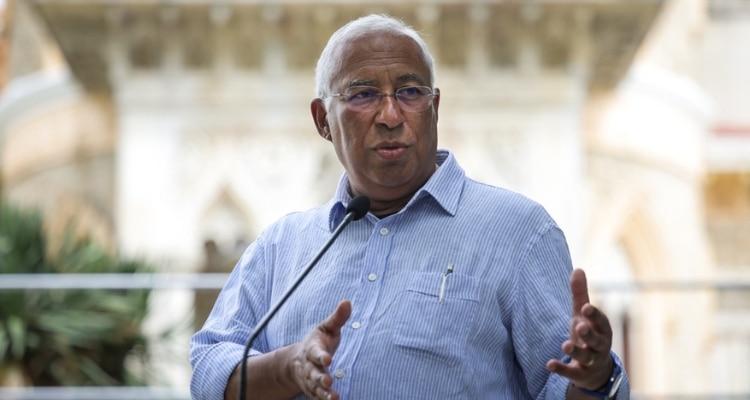
Costa supports abolition of the RNH tax regime
In an interview to the TVI/CNN Portuguese TV channel on Monday, October 2, 2023, Prime Minister Antonio Costa said that ‘it did not make sense any more’ to keep the RNH opportunity available. The politician reminded the audience that the program had been in operation since 2009. According to him, the beneficial tax regime will be abolished early in 2024.
This is the first public confirmation of the intention of the Portuguese Government to put an end to the popular tax scheme. The Government officials were discussing the housing crisis in Portugal for several weeks and they arrived at the conclusion that the RNH program was partially responsible for the crisis. Supposedly, the program participants actively buy/ rent residential property in Portugal to meet the program requirements and qualify for tax reductions.
The growing number of non-habitual tax residents in Portugal is believed to drive the housing prices up. As a result, houses and apartments become less affordable for the average Portuguese person.
The Prime Minister said that the NHR scheme had ‘already borne fruit'. After the first ten years when the opportunity was available, 59% of those who had used the preferential tax treatment chose to stay in Portugal. The percentage is rather impressive because the tax benefits that the program brings are not available for more than 10 years.
Costa said that keeping the opportunity available in the future might set the stage for increased financial injustice. This would not only be irrational but also would lead to higher inflation in the housing market. The housing market needs to ‘cool down’, according to Costa. He noted that the situation was especially acute in Lisbon and Porto.
The context of Costa’s decision
In the political context, Costa’s decision to put an end to the Residente Não Habitual tax regime should be seen as a concession to the Left Bloc (Bloco de Esquerda) and the Communist Party of Portugal (Partido Comunista Português). Representatives of both parties in the Parliament have been lobbying abolition of the scheme for a long time.
They argue that the program is a source of ‘fiscal inequality’. They claim that the Residente Não Habitual scheme only creates problems for Portugal and does very little good.
Even though the Left Bloc and Portuguese communists have been pushing to abolish the beneficial tax scheme, the Government has been denying their claims until now. In particular, the lobbyists of RNH abolition submitted two bills to the Portuguese Parliament for consideration on September 15, 2023. The bills would cancel the program and decrease the tax reductions. On September 20, the Parliament voted against the bill to repeal the RNH.
On February 16, 2023, Costa made the first announcement about the intentions of the Government to implement the ‘More Housing’ (Mais Habitação) bill by canceling the ‘golden visa’ program and taking some other measures too. The bill should stabilize the situation in the housing market in Portugal. However, in the same speech the Prime Minister declined the possibility of closing the RNH program. ‘We cannot kill the hen that lays golden eggs’, he said.
After 8 months, Costa changed his mind. He admitted that the decision to abolish the Residente Não Habitual scheme was made after the protests that took place all over the country on Saturday, September 30. Hundreds of people took to the streets to demand a fast resolution to the housing crisis in Portugal.
It is important to remember that the tax regime has been available since 2009. This means that it was adopted under the administration of Jose Socrates, Antonio Costa’s predecessor as Prime Minister.
What awaits the existing RNH program beneficiaries?
During an interview to TVI/CNN journalists, Prime Minister Costa assured the audience of the channel that the end of the program would not affect its current beneficiaries in any way. Tens of thousands of people are currently using the benefits that the RNH program brings.
The politician admitted that the inflow of wealthy foreigners had stimulated the growth of demand and the number of jobs in Portugal. However, he also pointed out that the RNH scheme had increased financial inequality in Portugal because its beneficiaries had higher incomes than the average Portuguese person did.
What is the RNH tax regime in essence?
Let us provide the key facts about the Residente Não Habitual program to give you a better understanding of how it works and what tax benefits it brings.
- Residence requirements. The RNH offers reduced tax rates to those individuals who relocate to Portugal from other countries on certain legal grounds. For example, they hold a ‘golden visa’, a D7 visa for financially independent persons, or even a Portuguese digital nomad visa. To qualify for the RNH program, the visa holder has to spend 183+ days per year in Portugal.
- The tax discount. The program allows reducing the personal income tax on many types of incomes obtained in Portugal to 20%. Pensions from foreign countries are taxed at 10%. For the sake of comparison: the income tax rate is progressive in Portugal and the highest rate is 48%. The progressive tax rate also applies to pensions. In addition to that, the RNH program beneficiaries are exempted from taxes on passive incomes derived outside Portugal. Some types of such incomes include the following ones:
- Rental of residential/ commercial property in foreign countries;
- Dividends and interests;
- Royalties.
- The target audience. Is the beneficial tax regime available to all foreigners living in Portugal? No, it is not. To qualify for the program, the foreign national has to perform professional activities ‘with high added value’ or be a pensioner. Consequently, the Residente Não Habitual program is aimed at attracting qualified specialists from abroad and those who draw pensions from foreign countries.
- Tax residence before acquiring the non-habitual resident status. To be eligible to apply for the RNH benefits, the person should have been a tax resident of another country for five years. This means that any foreigner can file an application for a tax cut as well as any Portuguese citizen who has been living outside Portugal for the last five years.
- The term of the special status validity. When the application for the RNH status has been approved, the person can use the benefits that it brings for 10 years in a row.
- The number of Residente Não Habitual program beneficiaries. According to the calculations made by the Portuguese Ministry of Finance, 89 thousand people have used the beneficial tax regime between 2009 when it became available and 2023. The figure includes both foreigners and Portuguese nationals.
- Advantages of the program for Portugal. Some ten years ago, Portugal was one of the poorest EU countries going through various crises. The tax scheme allowed attracting wealthy foreigners to Portugal. Are there any figures that might confirm the benefits of the RNH program for the Portuguese economy? Radio Renascença, a local radio station, has done some research. The journalists have studied the data for 2017 and found out that the tax scheme beneficiaries paying taxes at reduced rates brought almost 80 million euros to the Portuguese budget. However, if those people had been taxed at regular rates, they would have paid more than 500 million euros in taxes. In 2020, the treasury lost 972.2 million euros due to the tax benefits used by the RNH program beneficiaries. The loss was 1.272 billion euros in 2021 and it grew to 1.508 billion in 2022. The figures are impressive indeed. But the question is: Would the foreigners have moved to Portugal if tax benefits had not been available to them? Probably not. Consequently, the country would have never seen tens of thousands of new wealthy consumers.
- The alternatives. Other EU member states offer similar opportunities too such as Greece and Italy, for example. Both countries also administer ‘golden visa’ programs that allow foreign investors to acquire legal residence there in a fast manner.
Assistance with fiscal and immigration issues in Portugal
Our team of experts will be happy to help you acquire the status of a Residente Não Habitual in Portugal before it’s too late. We can also assist you in obtaining a ‘golden visa’, a visa for financially independent persons, or a digital nomad visa. You are also welcome to request our support if you would like to register a business company in Portugal and open a corporate account there. Please request a free consultation on these matters.

Do not hesitate to contact our experts right now using the means of communication that you prefer!
