If you want to reduce your unnecessary tax burden legally, it can get complicated. Governments around the world are making the rules tougher, and you can see new regulations popping up every year. As a result, business people often feel overwhelmed.
What is more, there are a lot of myths about offshore jurisdictions. Many people think of a tax haven only as a Caribbean island with palm trees and secret bank accounts. But the truth is that the landscape is far more diverse. In fact, some of the most powerful tax strategies are found not offshore but within the United States itself.
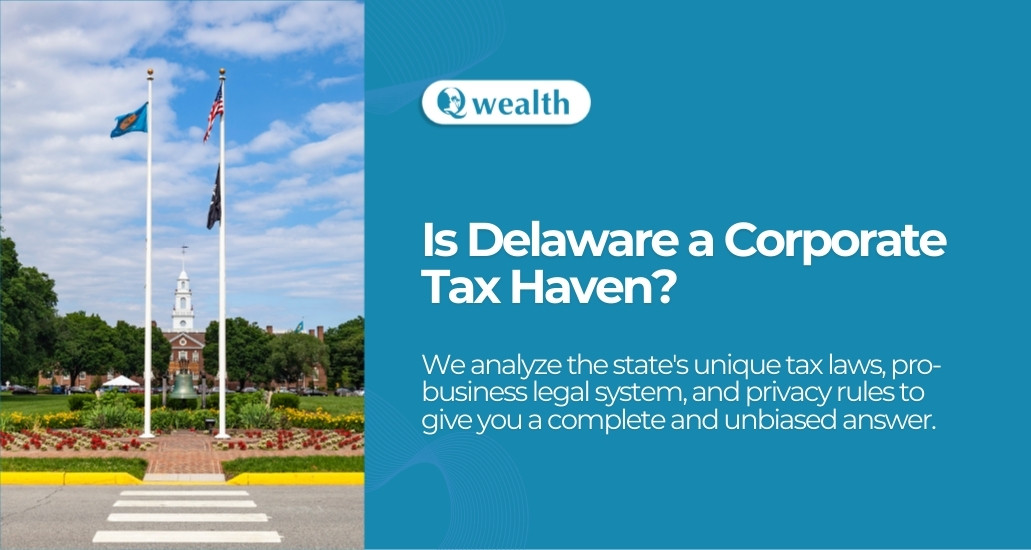
One of the most famous examples is Delaware. It has been popular with entrepreneurs for decades. Why? Delaware is a place where you will find unique tax advantages and pro-business laws. There are also strong privacy protections, which make the state a real haven, though it's a bit different from what you might expect. Let's explore why Delaware is considered a recommendable tax haven and the main reasons why you may want to use it. If you want to go deeper, we will be happy to help you start the process right now.
First, What Exactly Is a "Tax Haven"?
Before we focus on Delaware, let's take a look at what we mean when we refer to a tax haven. The concept is more than just a catchphrase you may find in newspapers. In international finance, a tax haven is a jurisdiction that has created favorable conditions for businesses and individuals to reduce their tax burden. You will usually find favorable tax treatment here; that is, tax rates are low or even zero. In addition, your financial privacy will be strongly protected.
The main characteristics of a tax haven are clear and easy to identify:
- Low or zero corporate income tax rates. This is the biggest draw. Companies can incorporate in a jurisdiction and avoid paying corporate income tax on profits earned elsewhere.
- Strong financial secrecy laws. These ensure that the names of owners, shareholders, or beneficiaries are not easily disclosed to the public or foreign tax authorities.
- A lack of transparency and limited exchange of information. Traditional tax havens have been criticized for not participating in global initiatives like CRS (Common Reporting Standard), which shares financial account data across borders.
This combination is what makes tax havens powerful. Companies can utilize tax havens to minimize their tax exposure, and this minimization can sometimes be dramatic. At the same time, they may enjoy the privacy of their ownership information.
Many people think that a classic tax haven is an exotic offshore destination, like the Cayman Islands or the British Virgin Islands. These jurisdictions are associated with high secrecy and low taxes. But the truth is, tax havens come in many forms. Some are small island nations, but others exist within large, respected economies.
That’s where Delaware comes in. Unlike the sandy shores of the Caribbean, Delaware is an inland US state, but it has crafted rules that mimic many of the same benefits. It is often described as an “onshore” tax haven: legally part of the United States, yet operating in ways that give businesses the same kind of relief and flexibility they might seek offshore.
The Verdict: Is Delaware a Corporate Tax Haven?
The answer is nuanced. Technically, yes—Delaware is a tax haven. But it’s not offshore. It is what many experts call an onshore or internal tax haven: you’re inside the United States, yet you can access benefits that look very similar to classic offshore setups.
Here’s why: for corporations that do not conduct business inside the state, there is no state corporate income tax on those out-of-state profits. In practical terms, if your company is incorporated in Delaware but earns its money elsewhere, you can legally bypass paying state corporate income tax there. You still handle federal obligations, of course, but at the state level, Delaware can feel like a zero-tax jurisdiction for non-Delaware activity.
That’s a powerful lever. It makes Delaware function much like an offshore holding company jurisdiction with the prestige, stability, and banking access that come from being under US law. Add in a predictable franchise tax (instead of an income-based state tax), no state sales tax, no tax on intangible assets (like trademarks and patents), and you begin to see why founders, funds, and multinationals gravitate to Wilmington addresses.
Two important caveats keep this “haven” reputation grounded in reality:
- Nexus matters. If you create a taxable presence (employees, offices, inventory, or other in-state activity), Delaware can tax the in-state portion. And if you operate in other states, you may need to qualify as a foreign entity there and follow those states’ tax rules.
- Compliance still applies. Federal tax, KYC/AML checks, and new transparency rules (like beneficial-owner reporting) continue to evolve. The Delaware edge is about smart structuring, not secrecy for secrecy’s sake.
If you use the jurisdiction correctly, Delaware will give you a reputable U.S. platform. That will provide many advantages associated with offshore destinations. These include the legal clarity ensured by the Court of Chancery, pro-business laws, and tax benefits offered by the state for operations conducted outside it. This is the combination that has made Delaware a point of global attraction for incorporation and a strategic choice for those who want legal tax efficiency combined with simplicity and predictability.
Why Is Delaware a Tax Haven? The Three Key Pillars
So, why do we say that Delaware is a tax haven? There are three pillars this status rests upon: the tax structure, the legal system, and the privacy standards. This is a unique mix that is hardly available in other states and even offshore destinations.
Pillar 1: The Favorable Tax Structure
Delaware offers tax benefits that rival any offshore company jurisdiction:
- No state corporate income tax for companies operating outside Delaware. This is sometimes called the “Delaware Loophole.”
- No tax on intangible assets, such as patents, trademarks, or royalties held by a Delaware entity. This is a key advantage for tech firms, pharmaceutical companies, and brand-heavy businesses.
- No state sales tax, no value-added tax (VAT), and no property tax on most business assets, which keeps ongoing obligations simple and predictable.
- Instead of income-based taxation, businesses pay a predictable Delaware franchise tax, starting as low as $300.
This tax structure is not only simple but also highly predictable. This is the reason why many businesses of different sizes opt for Delaware as their base. You can conveniently plan your budget here and avoid the surprises associated with income-based state taxes.
Pillar 2: The Pro-Business Legal System
Legal infrastructure is a second pillar that is just as important. Delaware boasts one of the world's most business-friendly legal frameworks:
- The Delaware General Corporation Law is considered the most advanced corporate law in the United States. It is flexible, modern, and designed to protect businesses and their investors.
- The Delaware Court of Chancery is a specialized court dedicated exclusively to corporate disputes. Judges, not juries, handle cases, and their decisions are consistent, expert, and respected worldwide.
Delaware boasts a highly predictable legal system. We all have some expectations as to the resolution of disputes, and they are usually met. Proceedings do not take long, while they may drag on for years in other countries or states. Investors choose Delaware so often because they highly appreciate its legal system.
Pillar 3: Anonymity and Privacy
Finally, privacy protections in Delaware are much better than in many other US states. You can keep the names of your Delaware LLC members private, which is valued by entrepreneurs who need as much confidentiality as is reasonably possible. It does not mean that the secrecy will be absolute, as regulators still have the right to request the information in some cases. Still, Delaware offers a level of confidentiality that is rare in the United States.
These three pillars, taken together, turn Delaware into a tax haven within the United States. It's much more than an opportunity to pay less. The jurisdiction is, in fact, a combination of legal certainty, predictable costs, and high confidentiality standards. This is the primary reason why Delaware stands out on the global stage.
How Delaware Compares to Offshore Havens
You might wonder: how does Delaware compare with a classic offshore tax haven like the Cayman Islands or the BVI?
Here’s a quick comparison:
| Feature | Delaware (Onshore Haven) | Cayman Islands (Offshore Haven) |
|---|---|---|
| Corporate Income Tax | 0% if operating outside the state | 0% |
| Reputation & Prestige | Very high (US jurisdiction) | Lower (watchlists exist) |
| Legal System | Respected US corporate law | English common law |
| Privacy | High for LLC owners | Traditionally high, now weaker due to CRS |
| Costs of Incorporation | Very low (~$100) | High ($1,000+) |
| Annual Fees | Low (franchise tax from $300) | High ($800–$1,000+) |
| Banking Access | Excellent (US + international) | More difficult; substance often required |
| Compliance | Moderate (US KYC/AML) | Strict (global pressure) |
| Typical Use Cases | Startups, funds, holding companies | Hedge funds, trusts, investment structures |
As you can see, Delaware offers tax advantages comparable to offshore company jurisdictions, but with the credibility and banking access that come from being in the United States.
The Controversies and Criticisms
Of course, Delaware’s system is not without controversy. Many large corporations use Delaware entities to minimize taxes in Delaware and across other states. This has drawn criticism from lawmakers and regulators.
International organizations, too, have raised concerns. While Delaware is not blacklisted, some argue that it is exploited illegally. The United States has also introduced the Corporate Transparency Act, requiring certain entities to disclose beneficial ownership information to federal authorities (it has been suspended, but nobody knows what will happen next).
Still, Delaware remains legal and fully compliant when used correctly. The challenge is ensuring your structure is set up properly. Tax avoidance is legal, but stepping into evasion is not. That’s where our expertise comes in. We guide you to use Delaware's tax advantages correctly, keeping you safe and compliant.
While the whole thing may look complex, the good news is that you are not alone. You can engage our specialists, who will handle the process of company formation in Delaware and make sure you make the most of the system.
Final Thoughts and Next Steps
As you see, Delaware is rightfully considered a tax haven. The legal system it offers is unparalleled, and the tax structure is definitely beneficial. If you opt for Delaware, you will get a pro-business environment that any company can benefit from. You can launch a startup or protect your assets using an offshore company.
But the rules are complex. Navigating state corporate income, federal obligations, and international compliance requires expert help. That’s where we step in.
We can set up your Delaware LLC or corporation quickly and with no hassle. You won’t have to worry about paperwork, compliance, or hidden pitfalls—we do it all for you.
You can contact us today for a free 15-minute consultation to discuss your options. Or, if you want a deep dive tailored to your case, book a one-hour session with one of our offshore formation experts for €300 (discounted from €500). Together, we’ll design the best path for your business.
