Choosing the right state to form your Limited Liability Company is a critical decision. LLCs are very popular in the U.S. as they offer liability protection and pass-through taxation.
Delaware and Wyoming are the most business-friendly states for LLC formation. Delaware offers beneficial corporate laws and a pro-investor environment, while Wyoming has low taxes, high privacy standards, and cost-effective business maintenance.
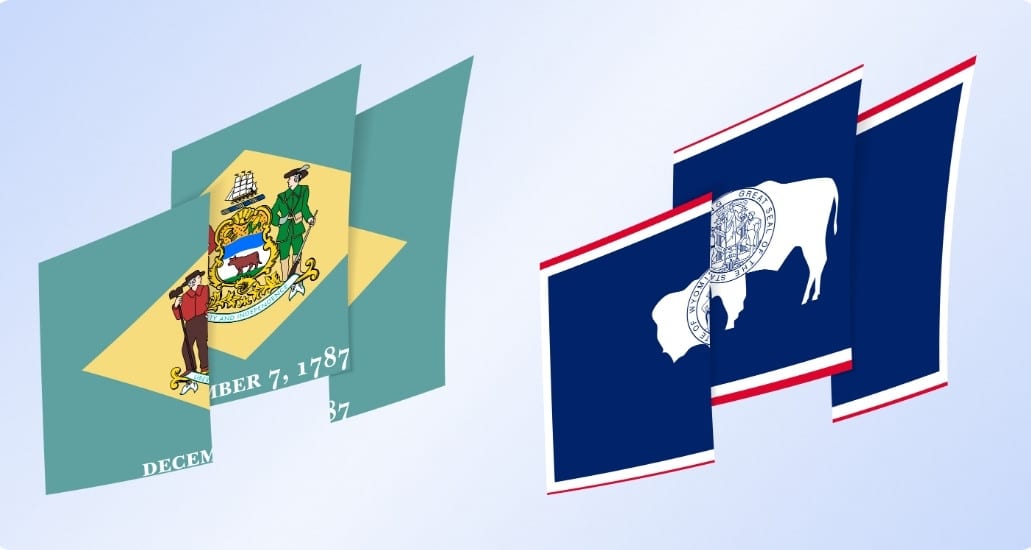
In this article, we will discuss formation costs, taxation policies, privacy regulations, legal frameworks, and ongoing compliance requirements. Understanding these differences will help business owners make an informed decision about LLC formation in 2025.
Overview of Delaware and Wyoming LLCs
Both states have advantages that make them appealing to non-resident entrepreneurs. However, the choice depends on your business.
What Is a Delaware LLC?
Delaware has long been recognized as a premier jurisdiction for business formation. Its Court of Chancery specializes in corporate law and provides efficient resolutions to business disputes. Large corporations and startups that seek venture capital find Delaware especially attractive.
In addition, Delaware offers a straightforward incorporation process, well-defined corporate governance laws, and a predictable legal system. Many Fortune 500 companies choose Delaware as their legal home.
What Is a Wyoming LLC?
Wyoming is a favorable destination for LLC formation, especially among small business owners and entrepreneurs. It offers low taxes, minimal regulations, and strong privacy protections. Businesses that seek a cost-effective and straightforward formation process find Wyoming’s business-friendly environment very appealing.
Wyoming’s pro-business legislative policies are just as important. Unlike other states, it has actively modified its LLC laws to enhance privacy and asset protection.
Both states may seem equally attractive. You can book a session with our experts, who will help you make the right choice.
Key Similarities Between Delaware and Wyoming LLCs
Both Delaware and Wyoming offer several advantages for LLCs:
- Liability Protection: Members’ personal assets are shielded from business debts and claims thanks to strong liability protection.
- Pass-Through Taxation: Profits/losses are reported on the individual members’ tax returns, which excludes double taxation.
- Flexible Ownership Structures: Flexible management structures that accommodate single-member LLCs and multi-member arrangements.
- Business-Friendly Legal Frameworks: Delaware and Wyoming have streamlined filing processes and supportive regulatory environments.
Key Differences Between Delaware and Wyoming LLCs
While similarities make both states attractive, the key differences between Delaware and Wyoming LLCs will help business owners make the right choice for their specific needs.
Business Registration and Formation Costs
- Delaware: The initial filing fee for forming a Delaware LLC is approximately $90. However, Delaware also imposes an annual franchise tax of $300.
- Wyoming: Wyoming charges a $100 filing fee to establish an LLC. An annual report fee starts at $50 and varies based on the company’s assets. Wyoming does not impose a franchise tax.
In addition to the initial filing fees, ongoing compliance costs should also be factored into the decision-making process. Wyoming’s fee structure may seem more appealing if you are on a tight budget.
Taxation Policies
- State Income Tax: Non-residents who incorporate in Delaware and operate their businesses outside the state are typically exempt from state income tax. Wyoming does not charge a state income tax at all.
- Franchise Tax: Delaware requires LLCs to pay an annual franchise tax, whereas Wyoming does not impose it.
Privacy and Confidentiality
- Delaware: Delaware requires the names and addresses of LLC members to be specified in the formation documents, which are part of the public record.
- Wyoming: Wyoming places a strong emphasis on privacy protection. The members’ names are not disclosed to the public.
Asset Protection and Legal Framework
- Delaware: The Court of Chancery makes legal disputes predictable as it provides a sophisticated legal environment with a vast body of case law. If you anticipate that your company may face complex legal challenges, opt for Delaware.
- Wyoming: Wyoming offers reliable asset protection laws. If you want members’ interests to be protected from personal creditors, set up a Wyoming LLC as it provides strong charging order protections.
Maintenance and Compliance
- Delaware: LLCs are required to file an annual report and pay the associated franchise tax. The regulatory requirements are more stringent and may necessitate additional administrative efforts.
- Wyoming: The state requires LLCs to file an annual report with a minimal fee. Its regulatory environment is less burdensome for small businesses.
Pros and Cons of Delaware LLC
Please take a good look at all the benefits and drawbacks, as some of them may be critical for your business.
Pros
- Strong Legal System. The Delaware Court of Chancery is a highly respected court that specializes in corporate law. Its decisions are based on a well-established body of case law.
- Preferred by Investors and Large Businesses. Many large investors, venture capitalists, and financial institutions prefer dealing with businesses incorporated in Delaware. The state’s legal framework makes it easier to secure funding and attract investors.
- Flexibility in Structuring Business Operations. Delaware offers a high degree of flexibility in structuring LLCs, which makes it easier for business owners to outline management responsibilities, voting rights, and profit-sharing arrangements.
- Tax Benefits for Non-Resident Owners. Delaware provides significant tax advantages for businesses operating outside the state: they are not subject to state corporate income tax.
Cons
- Higher Annual Costs. Delaware LLCs come with higher annual costs compared to other states. The state requires businesses to pay an annual franchise tax, which starts at $300.
- Complex Compliance Requirements. Businesses in Delaware must meet various reporting and administrative obligations, such as filing annual reports and maintaining registered agents.
- Franchise Tax Obligations. One of the major downsides of incorporating in Delaware is the franchise tax, which can be a significant expense for smaller LLCs.
Pros and Cons of Wyoming LLC
Wyoming has its bright side and downside as well. Let’s take a look.
Pros
- No State Income Tax or Franchise Tax. Wyoming does not impose a state income tax on businesses or individuals. No franchise tax is payable, either, so business owners can save significantly on annual expenses.
- Strong Privacy Protections. Wyoming does not require the disclosure of LLC owners’ names in public records so business owners can maintain anonymity.
- Low Formation and Maintenance Costs. Wyoming LLCs are relatively inexpensive to form and maintain. The initial filing fee is low, and the annual report fee is one of the lowest in the country.
- Best for Small Businesses and Asset Protection. Wyoming has some of the most powerful asset protection laws in the U.S. and offers enhanced protection against personal liability and creditors. The simplicity and affordability of Wyoming LLCs attract small businesses and solo entrepreneurs.
Cons
- Limited Recognition for Large Corporate Operations. While Wyoming is an excellent choice for small businesses, it may not be the best option for larger corporations.
- Not the Preferred Choice for Venture Capital Funding. Investors and venture capitalists typically prefer Delaware-based LLCs or corporations because of the state’s business-friendly court system and extensive case law history. Wyoming LLCs may not be the ideal choice for those seeking large-scale funding.
- Less Established Case Law Compared to Delaware. Delaware has a long-standing history of business-related legal precedents, making it a more predictable and reliable choice for handling corporate disputes. Wyoming’s legal framework is still developing, which can be a disadvantage for business owners who may need to resolve complex legal matters.
Delaware vs Wyoming LLC – Which One Is Best for You?
The best way to find out is to book a session with our experts and discuss both opportunities. Still, let’s consider the most important details.
Best Choice for Startups and Venture Capitalists
- Why Delaware is the Preferred Jurisdiction for Tech Startups. Delaware has a long-standing reputation as the go-to state for tech startups and other high-growth companies. The state offers well-developed corporate laws, which is a crucial factor for startups that want to scale quickly.
- Venture Capital Firms and Investor Preferences. Many venture capital firms prefer to invest in Delaware-based companies due to the state’s well-established corporate legal system. Delaware’s business laws are investor-friendly, making it easier for startups to attract funding.
Best Choice for Small Businesses and Entrepreneurs
- Why Wyoming is Better for Single-Member LLCs. The state’s minimal regulatory requirements and straightforward LLC formation process make it an ideal choice for entrepreneurs who want to start and manage a small business or a single-member LLC with ease.
- Cost-Effective and Privacy-Friendly Approach. Wyoming has one of the lowest LLC formation and maintenance costs in the U.S. Unlike Delaware, Wyoming does not impose a franchise tax, which is a major draw for small businesses. Additionally, Wyoming provides strong privacy protections, allowing LLC owners to remain anonymous in public records.
Best Choice for Asset Protection
- Comparison of Liability Shielding. Both Delaware and Wyoming offer strong liability protection. However, Wyoming’s asset protection laws are considered some of the strongest in the country.
- Which State Provides Stronger Protection for Personal Assets? Wyoming has enhanced charging order protections, making it more difficult for creditors to seize a member’s interest in an LLC.
Best Choice for Non-U.S. Residents
- International Considerations for Delaware and Wyoming LLCs. Non-U.S. residents will enjoy benefits in both states. However, Wyoming is often preferred due to its straightforward formation process, lower costs, and privacy protections. In addition, it does not require members’ names to be listed in public records.
- Banking and Tax Implications for Foreign Business Owners. Both states allow non-U.S. residents to own and operate an LLC without being physically present in the U.S. However, banking and tax considerations vary. Delaware LLCs can establish business relationships with major U.S. banks due to the state’s strong corporate reputation. On the other hand, Wyoming’s lack of state income tax and lower compliance requirements help foreign entrepreneurs minimize administrative burdens.
How to Form an LLC in Delaware or Wyoming
The process is pretty straightforward, but it will still require some effort. If you feel like delegating all the administrative matters to experts, feel free to contact us and discuss the details.
Steps for Forming a Delaware LLC
- Choose a Business Name: Select a unique name that complies with Delaware’s LLC naming requirements. The name must include “Limited Liability Company” or an abbreviation like “LLC.”
- Appoint a Registered Agent: A registered agent with a physical address in the state will receive legal documents on behalf of the business.
- File Certificate of Formation: Submit the Certificate of Formation to the Delaware Division of Corporations and pay the required filing fee.
- Obtain an EIN: Obtain an EIN from the IRS to handle tax obligations.
- Open a Business Bank Account: Set up a corporate bank account to keep personal and business finances separate.
- Comply with Reporting Requirements: Submit annual reports and pay the local franchise tax to keep your LLC in good standing.
Steps for Forming a Wyoming LLC
- Choose a Business Name: Choose a unique LLC name that adheres to Wyoming’s naming guidelines. The name must include “Limited Liability Company” or “LLC.”
- Appoint a Registered Agent: A Wyoming LLC must select a registered agent who has a local address.
- File Articles of Organization: Submit the Articles of Organization to the Wyoming Secretary of State and pay the applicable filing fee.
- Obtain an EIN: Register for an EIN with the IRS for tax purposes and to establish a business bank account.
- Open a Business Bank Account: Keep personal and business finances separate, as this is key to strong legal protection.
- Maintain Privacy Protections: LLC owners should take advantage of privacy options by not listing personal information publicly.
Conclusion
Both Delaware and Wyoming offer distinct advantages for LLC formation. Delaware will be a better choice if you seek venture capital and a well-established legal framework. Wyoming is an ideal place if you put low costs, privacy, and asset protection first. Ultimately, your decision should be in line with your business goals and operational needs.
Consider the nature of your business and your long-term financial goals to decide whether Delaware or Wyoming will be better for you. Regardless of which state you choose, forming an LLC in either Delaware or Wyoming will provide a strong foundation for your business’s growth and legal protection.
Please get in touch with us to receive qualified advice and start a business successfully!
Which is better for an LLC, Delaware or Wyoming?
It depends on your business goals. Delaware is ideal for startups and businesses seeking venture capital, as investors are familiar with Delaware’s legal system. Wyoming, however, is better for small businesses, entrepreneurs, and those prioritizing lower costs and privacy protections.
What is the cheapest state to form an LLC?
Wyoming is one of the most cost-effective states for LLC formation, with low filing fees, no franchise tax, and minimal annual maintenance costs compared to Delaware.
Does Delaware or Wyoming offer better tax advantages?
Wyoming offers better tax advantages for most small businesses because it has no state income tax or franchise tax. Delaware, while tax-friendly for businesses operating outside the state, does impose a franchise tax and state income tax on entities doing business within its jurisdiction.
Is Wyoming better for LLC asset protection?
Yes, Wyoming provides some of the strongest asset protection laws in the U.S. Its charging order protections make it difficult for creditors to seize a member’s LLC interest, making it a superior choice for business owners focused on asset protection.
Why do investors prefer Delaware LLCs?
Investors and venture capital firms prefer Delaware LLCs because of the state’s well-developed corporate laws, the specialized Court of Chancery, and its business-friendly legal framework. Delaware’s long history of handling corporate disputes provides a level of predictability and security that investors find appealing.
