Launching a business abroad in 2026 is easier than ever, but also more competitive. Global entrepreneurs now have access to online incorporation systems, startup-friendly tax regimes, and digital-nomad visas that were simply nonexistent a decade ago. Yet with so many options, identifying the best countries to start a business requires more than browsing “top lists.” It demands a hard look at the data: taxes, market access, stability, innovation, and quality of life.
This guide brings together official sources (the World Bank’s new B-READY index, OECD corporate tax rates, and StartupBlink’s global startup ecosystem rankings) to give you a clear, evidence-based picture of where to set up a business and why. Whether you aim to tap into venture capital in the US, take advantage of Singapore’s tax clarity, or run a fully remote EU company via Estonia’s e-Residency, you’ll find your ideal place to start right here.
Key Takeaways
- Our analysis is based on up-to-date data: the B-READY Report by the World Bank (it replaces “Ease of Doing Business”), OECD/Tax Foundation for tax metrics, and StartupBlink 2026 for startup ecosystem strength.
- If you intend to set up a business internationally, your key levers include a clear regulatory environment, low or predictable tax burden, easy access to talent and capital, and overall business-friendly climate.
- The list below highlights the best countries to start a business in 2026. They have been selected for differing business models so you can pick the best place to start for your goal.
Top 10 Countries for Entrepreneurs at a Glance
| Rank | Country | Why it stands out |
|---|---|---|
| 1 | United States | Massive market, deep venture ecosystem, serial entrepreneurship. |
| 2 | United Kingdom | English-language law, global financial services hub, strong startups. |
| 3 | Singapore | Simple tax regime (17 %), gateway to ASEAN, business-friendly. |
| 4 | United Arab Emirates | Very low corporate tax rate (0/9 %), free zones, strategic location. |
| 5 | Estonia | e-Residency, entirely online incorporation, digital-first country. |
| 6 | Canada | High-quality life, access to North American markets, and immigrant-friendly. |
| 7 | Germany | Strong industrial/tech base, solid infrastructure, EU access. |
| 8 | Ireland | English in the EU, a favorable tax regime, and HQ for many global companies. |
| 9 | Netherlands | Excellent logistics, pro-business regulation, EU gateway. |
| 10 | Hong Kong | Asia-Pacific financial hub, streamlined company setup, tax clarity. |
We call this our official 2026 ranking of the best countries to start a business. Below you’ll find how we ranked them, then the detailed breakdowns.
How We Ranked the Best Countries: Our Scoring Methodology
We used the following sources to pick the top ten:
- Ease of doing business & regulatory environment → B-READY (World Bank).
- Tax friendliness → OECD / Tax Foundation (corporate tax rate, transparency).
- Startup ecosystem & innovation → StartupBlink 2026 (global index for startups).
- Economic & political stability → macro data, media, expert sources.
- Affordability (labor cost included)
- Skilled workforce
- Living conditions
- ease of doing business
- tax friendliness
- startup ecosystem strength
- stability
- quality of life
- Massive domestic market gives companies scale and potential to grow quickly.
- Leading venture capital and easy access to funding and talent.
- Strong infrastructure (including tech hubs and corporate services) that supports growth.
- Costs may be higher than in many other jurisdictions.
- You will have to mind different rules across states and take care of multi-jurisdiction compliance.
- The federal corporate tax rate equals 21 %; however, if you add federal, state, and local taxes, the actual figure may differ a lot.
- Tech startups aiming for rapid global scale.
- Companies seeking deep capital markets, major exits (IPO/M&A).
- Entrepreneurs wanting access to the largest consumer base and high-end talent.
- English legal system, strong reputation, good access to worldwide markets.
- Large fintech and startup ecosystems, strong professional services, and international connectivity.
- Broad talent base and robust financial services sector.
- Cost of living & office space (especially in London) is high.
- Brexit created some uncertainty as to EU market access and regulatory alignment.
- Corporate tax is higher than in some more tax-optimized jurisdictions.
- International startups seeking an English-language base in Europe.
- Companies that need London’s financial services, global HQ functions.
- Entrepreneurs who need convenient infrastructure and brand credibility.
- Transparent corporate tax rate; new companies have tangible incentives.
- Strategic location in Asia, excellent logistics and connectivity, English widely used.
- Political stability, strong rule of law, good for regional HQ or expansion.
- The domestic market is relatively small, so growth often depends on export or regional expansion.
- Office/real-estate and talent costs are rising.
- Competition for top talent is high, which can make salaries and benefits considerably more expensive.
- Companies focusing on tech or services that target the Asia-Pacific region.
- Entrepreneurs who seek a business-friendly base in Asia.
- Startups that want a quick setup and a regional launchpad with tax clarity.
- A moderate standard tax rate compared to many developed jurisdictions.
- Free zones offer 100% foreign ownership, easy repatriation of profits, and streamlined processes.
- Strategic location that bridges Middle East, Africa, and Asia can be useful for regional operations.
- Some free-zone benefits depend on meeting substance requirements and local regulations.
- The domestic market is modest; if you target global growth, you will still need export or international operations.
- Some aspects (like visas/talent) may require additional effort if we compare them to more mature jurisdictions.
- Entrepreneurs wanting a low-tax base and regional headquarters.
- Digital businesses, trading companies, or service firms needing easy incorporation and low overhead.
- Investors who need a business-friendly jurisdiction with global connectivity.
- Unique tax regime: profits are tax-free until distributed — excellent for reinvestment.
- Very digital government, superb for remote/online business models; global accessibility via e-Residency.
- EU membership gives regulatory credibility and access to European markets.
- The domestic market is small — growth requires looking outward internationally.
- Talent pool is good but smaller compared to major hubs; scaling may require recruiting internationally.
- While tax on retained profits is 0 %, other operational costs (office, compliance) still apply.
- Online businesses, digital nomads, and entrepreneurs who don’t require a large local market but want an EU base.
- Startups aiming to start a business quickly and with minimal physical overhead.
- Founders who are looking for an EU-compliant, fully remote incorporation option.
- High quality of life, stable political environment, strong institutional support for innovation.
- Access to North American markets and talent; immigration programs favorable to entrepreneurs.
- Good infrastructure and strong brand for credibility.
- Tax rates higher than ultra-low jurisdictions.
- Some provinces may have more bureaucracy or slower processes for certain licenses.
- Costs (especially in major cities) can be high for talent and office space.
- Entrepreneurs seeking a balance between growth and quality of life.
- Companies wanting a North American presence without U.S. complexity.
- Businesses aiming to incorporate in a credible Western jurisdiction.
- Very strong engineering and manufacturing ecosystem; excellent for deep tech/hardware.
- Central position in Europe gives a logistical advantage; a large domestic market.
- High regulatory clarity, rule of law, and institutional strength.
- Tax rate and labor costs higher than in many startup-friendly jurisdictions.
- Some administrative burden and slower pace of registration/processes compared to more agile jurisdictions.
- For digital startups scaling globally, the domestic market size may feel more limited compared to the U.S.
- Deep-tech and manufacturing startups, hardware/IoT, companies needing an EU industrial base.
- Entrepreneurs needing strong talent in engineering and access to European supply chains.
- Companies looking for credibility and “German engineering” brand value.
- Low corporate tax rate in Europe; strong for multinational structures and startups alike.
- English-language jurisdiction within the EU; good access to US and EU markets.
- Many global tech companies have Irish operations—strong ecosystem, talent, and services.
- Cost of living and office space in Dublin rising quickly.
- Domestic market is small; scale often relies on global expansion.
- Competitive market for talent and office space in key hubs.
- Startups and companies needing an EU base while leveraging the English language and low tax.
- Tech firms, multinational HQs, companies needing access to Europe+US.
- Entrepreneurs wanting a business-friendly EU jurisdiction with low tax and global reach.
- Excellent infrastructure and logistics; gateway to the European market.
- Strong rule of law, transparent regulation, and English widely used in the business context.
- Good tax treaty network and favorable for international companies.
- Corporate tax rate is higher than in some ultra-low-tax jurisdictions.
- Cost of living, office, and wages in major cities may be high.
- Domestic market moderate in size; growth outside may be needed.
- Companies focusing on European logistics, distribution, e-commerce, trade, or digital services.
- Entrepreneurs who want a stable EU base with strong connectivity.
- Businesses needing English-language friendly EU hub.
- Low corporate tax rate by developed-market standards, very efficient incorporation.
- Exceptional access to Asia-Pacific markets, particularly Greater China & Southeast Asia.
- Strong global financial reputation, world-class banking and professional services.
- Geopolitical and regulatory risk needs attention (China/PRC linkage).
- Cost of living and office in central areas can be high.
- Domestic market is limited; scale often means expanding outside Hong Kong.
- Trading companies, fintech, companies targeting Asia-Pacific growth.
- Startups needing a financial hub with fast company setup and access to capital and markets.
- Entrepreneurs looking for a strategic entry into Asian markets via a globally respected base.
- In 2026, Israel ranked third globally for startup ecosystem strength, while Sweden maintained its position among the world’s top five innovation economies.
- Companies in the UAE enjoy 0% tax on profits under AED 375,000 and 9% thereafter, while Singapore maintains a 17% headline rate with generous exemptions for new businesses.
- Portugal’s Startup Visa continues to attract entrepreneurs thanks to its low initial capital requirements and relatively low cost of living.
- Estonia’s e-Residency program has issued more than 100,000 digital IDs, enabling founders from over 170 countries to run EU-based businesses remotely.
- Portugal — operates a dedicated Startup Visa Program managed by IAPMEI, giving non-EU entrepreneurs residency if they develop an innovative, scalable business in partnership with an approved incubator. It also offers a Golden Visa pathway for investors who prefer a capital-based route to residency.
- Portugal’s startup ecosystem benefits from EU market access and one of Europe’s most entrepreneur-friendly residency frameworks.
- Canada — runs the well-established Startup Visa Program, allowing permanent residence for founders endorsed by designated venture capital funds, angel investor groups, or business incubators. The program favors high-growth tech, clean-energy, and innovation-driven projects.
- Canada remains one of the few countries where successful startup visa applicants can obtain direct access to permanent residency.
- United Arab Emirates (UAE) — through its Golden Visa and Entrepreneur Residency schemes, offers long-term residence to founders who establish innovative businesses or invest in qualifying sectors. The UAE combines a zero-to-low-tax framework with advanced infrastructure and global connectivity.
- Recent updates to the Abu Dhabi investor visa allow eligible entrepreneurs to secure a renewable 10-year residence, making the UAE a leading destination for startup founders in the Middle East.
- Identify your place of launch: do you prioritize ultra-low tax base (e.g., UAE), access to markets (US/UK), or fully remote/online (Estonia)?
- Check the corporate tax rate and overall tax regime: how much will you pay, and what incentives exist?
- Evaluate the startup ecosystem: funding availability, talent pool, market access.
- Review visa/immigration/residency requirements if you (or your key team) will relocate or need legal residency.
- Prepare to register and incorporate your entity: ensure you meet local compliance, banking, and reporting obligations.
Criterion 1: Ease of Doing Business
Based on the B-READY framework, which covers 10 topics: business entry, business location, utility services, labor, financial services, international trade, taxation, dispute resolution, market competition, and business insolvency. We selected countries with high scores in regulatory clarity, streamlined procedures, and public service efficiency.
Criterion 2: Tax Friendliness
Key metric: corporate tax rate + predictability + incentives for new businesses.
We cherry-picked the jurisdictions with business-friendly taxation and where non-resident founders are sure to meet minimal administrative hurdles.
Criterion 3: Startup Ecosystem & Innovation
The global startup ecosystem index by StartupBlink was the basis for our research. It relies on the strength of venture capital, innovation talent, startup density, and the potential of a particular economy or growth.
Criterion 4: Economic & Political Stability
Entrepreneurs need environments where rules don’t shift overnight; needless to say, infrastructure, the rule of law, and institutional integrity must be reliable as well.
Criterion 5: Quality of Life & Cost of Running a Company
Here are the main aspects we considered:
The last factor is sometimes just as important as starting a business abroad may entail relocation.
The Official 2026 Ranking: Top 10 Countries to Start a Business
We used five key criteria to compare more than 50 economies:
It helped us identify the world’s top destinations for entrepreneurs in 2026. These are the countries with benign taxation where the business climate is truly friendly.
1. United States (Overall Score: 9.5/10)

At a Glance
| Metric | Value |
|---|---|
| Corporate tax rate | 21 % federal statutory rate. (Effective rate higher when combining state tax) |
| GDP (nominal, ~2024) | Approx. US$29 trillion |
| Startup ecosystem rank | #1 globally — deepest VC market and largest number of quickly growing companies |
| Ease of doing business / regulatory environment | Very mature, though the conditions vary greatly depending on the state |
| Currency | USD |
| Typical company registration time | 1–6 days in many states for LLC formation (depending on state) |
Pros:
Cons:
Best for:
Delaware and Wyoming are the best picks if you are after the US market.
2. United Kingdom (Overall Score: 9.2/10)

At a Glance
| Metric | Value |
|---|---|
| Corporate tax rate | 25 % (as of 2024-25) |
| GDP (nominal) | Approx. US$3.2 trillion |
| Startup ecosystem rank | Top in Europe; London remains a major global startup & fintech hub |
| Ease of doing business / regulatory environment | Very good for English-language international business, but a higher cost base in London |
| Currency | GBP |
| Typical company registration time | 5-10 days for a private company (“Ltd”) |
Pros:
Cons:
Best for:
3. Singapore (Overall Score: 9.1/10)

At a Glance
| Metric | Value |
|---|---|
| Corporate tax rate | 17 % flat for most companies |
| GDP (nominal) | Approx. US$560 billion |
| Startup ecosystem rank | A Southeast Asian leader that excels in technology, fintech & logistics |
| Ease of doing business / regulatory environment | Efficient business registration and operational environment |
| Currency | SGD |
| Typical company registration time | From 14 days to 2 months subject to preliminary document preparation |
Pros:
Cons:
Best for:
4. United Arab Emirates (Overall Score: 9.0/10)

At a Glance
| Metric | Value |
|---|---|
| Corporate tax rate | 0 % on taxable income that is under AED 375,000; 9 % for income above that figure |
| GDP (nominal) | Approx. US$450–500 billion (varies by estimate) |
| Startup ecosystem rank | Quickly growing in Middle East; free zones improve its accessibility |
| Ease of doing business / regulatory environment | Very business-friendly, with numerous free zones; full foreign ownership is allowed in many cases |
| Currency | AED |
| Typical company registration time | Incorporation within free zones can often be completed in a few days |
Pros:
Cons:
Best for:
5. Estonia (Overall Score: 8.8/10)

At a Glance
| Metric | Value |
|---|---|
| Corporate tax rate | 0 % on retained and reinvested profits |
| GDP (nominal) | Approx. US$40 billion |
| Startup ecosystem rank | Among strongest in Baltic/NE Europe if we consider digital business models |
| Ease of doing business / regulatory environment | Easy online incorporation via e-Residency and efficient digital systems |
| Currency | EUR |
| Typical company registration time | Hours to one day via online portal (for many cases) |
Pros:
Cons:
Best for:
6. Canada (Overall Score: 8.6/10)

At a Glance
| Metric | Value |
|---|---|
| Corporate tax rate | Federal + provincial equals ~25-27 % (depending on the province) |
| GDP (nominal) | Approx. US$2.2 trillion |
| Startup ecosystem rank | Strong and growing (Toronto, Vancouver, Montreal); increasing VC activity |
| Ease of doing business / regulatory environment | Stable and transparent; benefit from high quality of life and infrastructure |
| Currency | CAD |
| Typical company registration time | 1-2 days if done federally; it varies in provinces due to business licenses |
Pros:
Cons:
Best for:
If you are seeking an excellent Canadian option, a GP in Ontario may be exactly what you need to achieve your goal.
7. Germany (Overall Score: 8.5/10)

At a Glance
| Metric | Value |
|---|---|
| Corporate tax rate | Approx. 30 % (including trade tax and solidarity surcharge) |
| GDP (nominal) | Approx. US$4.5 trillion |
| Startup ecosystem rank | Strong industrial tech base, deep engineering talent, growing startup hubs (Berlin, Munich) |
| Ease of doing business / regulatory environment | Very good infrastructure, but administrative processes may be slower vs some startup-centric hubs |
| Currency | EUR |
| Typical company registration time | Varies by state; GmbH formation may take days to weeks |
Pros:
Cons:
Best for:
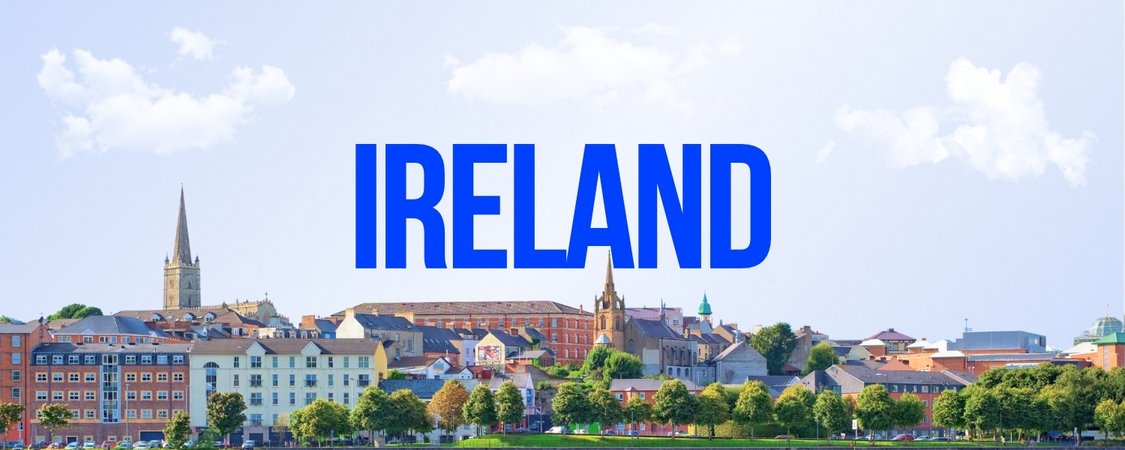
8. Ireland (Overall Score: 8.4/10)
At a Glance
| Metric | Value |
|---|---|
| Corporate tax rate | 12.5 % (standard trading rate) |
| GDP (nominal) | Approx. US$550 billion |
| Startup ecosystem rank | Very strong in Europe; many global companies use Ireland as an EU base |
| Ease of doing business / regulatory environment | English-language base in the EU, good tax treaties, strong legal system |
| Currency | EUR |
| Typical company registration time | 1 day possible for a standard Private Company (Ltd) |
Pros:
Cons:
Best for:
9. Netherlands (Overall Score: 8.3/10)

At a Glance
| Metric | Value |
|---|---|
| Corporate tax rate | Approx. 25.8 % (standard rate on profits up to ~€200k at 19 % in some cases) |
| GDP (nominal) | Approx. US$1 trillion |
| Startup ecosystem rank | Strong logistics & innovation hub in Europe, good for trade/distribution and digital services |
| Ease of doing business / regulatory environment | Very favorable: English widely used, good infrastructure, efficient logistics |
| Currency | EUR |
| Typical company registration time | 1-2 days possible for standard BV (private company) |
Pros:
Cons:
Best for:
10. Hong Kong (Overall Score: 8.2/10)

At a Glance
| Metric | Value |
|---|---|
| Corporate tax rate | 16.5 % on profits; first HKD 2 million may enjoy a lower rate; some offshore profits may be exempt |
| GDP (nominal) | Approx. US$400 billion |
| Startup ecosystem rank | Strong for Asia-Pacific; great for fintech, trading, China/Asia gateway |
| Ease of doing business / regulatory environment | Very efficient registration, English-language friendly, strong rule of law, global financial hub |
| Currency | HKD |
| Typical company registration time | Within 1 day online possible for a private limited company (if documents are ready) |
Pros:
Cons:
Best for:
Best of the Best: Top Countries by Your Specific Goal
While the overall ranking highlights the most balanced business environments worldwide, every entrepreneur has unique priorities — from low taxes to tech innovation or digital freedom. This section breaks the global leaders down by specific goals, helping you identify which country fits your startup’s DNA best. Whether you’re a tech founder chasing venture capital, a digital nomad seeking online freedom, or a bootstrapped creator looking for affordable growth, here’s where each destination truly shines.
Best for Tech Startups: United States, Israel, Sweden
These countries consistently lead global innovation rankings and attract the largest volumes of venture capital. They combine strong startup ecosystems, advanced R&D infrastructure, and government-backed innovation funding.
Best for Lowest Taxes: United Arab Emirates, Singapore
These jurisdictions offer exceptionally competitive tax regimes paired with reliable legal frameworks and international credibility. The UAE stands out for its near-zero rates, while Singapore combines moderate taxation with investor confidence and global market access.
Best for Bootstrappers (Low-Cost Growth): Czechia, Portugal
Both countries balance affordability with access to the European market. They offer lower living and operating costs, government startup incentives, and residency options that appeal to independent founders.
Best for Digital Nomads & Online Businesses: Estonia, United Arab Emirates
These destinations simplify global entrepreneurship through digital incorporation and flexible residency rules. Estonia allows remote company formation entirely online, while the UAE provides low-tax free zones ideal for location-independent entrepreneurs.
The First Step: Visas and Legal Residency for Entrepreneurs
Before choosing where to incorporate, founders should understand how residency and visa rules affect long-term operations. Many countries now offer tailored entrepreneur or startup visas that make it easier to live, work, and grow your business abroad.
What is a Startup Visa?
A startup visa is a permit that allows entrepreneurs to relocate (or reside) based on a viable business idea, often with support from incubators/accelerators.
Top 3 Countries with Accessible Entrepreneur Visa Programs
As more governments compete for global talent and innovation, a growing number of countries now offer entrepreneur or startup visa programs, granting residency to founders who can demonstrate viable business ideas and growth potential. These programs are designed to attract innovators, create jobs, and strengthen national startup ecosystems.
How to Take the First Step to Start a New Business Abroad
Taking these first steps can feel overwhelming, especially when legal, tax, and banking requirements differ across jurisdictions. Our team will guide you through the entire process — from choosing the right country and preparing documentation to company registration, opening a corporate bank account, and securing your residence or startup visa. We simplify the setup so you can focus on what matters most: building and growing your international business.
