There's a new player in the global ‘golden passport’ market. The Solomon Islands government has announced the launch of their own economic citizenship program. So far, there’s no word on whether there will be nationality-based restrictions for applicants. Let’s take a closer look at the potential of a Solomon Islands passport and the preliminary information about how it can be obtained.
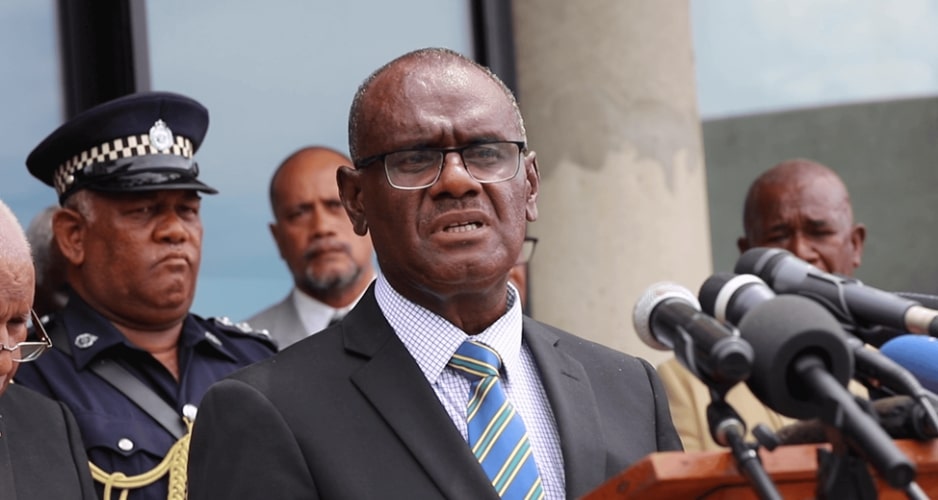
A Bill has been introduced for the Solomon Islands citizenship-by-investment program
On September 10, 2024, the current Prime Minister of the Solomon Islands, Jeremiah Manele (in the photo above), announced that the first draft of a law for granting citizenship in exchange for investment has been completed. The document is expected to be introduced in parliament soon. Once the program is up and running, investors and their families who have to pass rigorous due diligence procedures will be able to receive Solomon Islands passports more quickly and with fewer hurdles than before.
"I am pleased to inform Parliament that the first draft of the citizenship by investment law has been finalized. The document, developed with input from the Attorney General’s Office, is currently undergoing further review before being submitted to the Cabinet for consideration," said Prime Minister Manele.
Back in 2020, the Solomon Islands started drawing attention from investor-immigrants following public statements from high-ranking officials regarding the government's plans to explore the feasibility of launching a ‘golden passport’ scheme. At that time, it was said that the program would resemble the economic citizenship program in the neighboring Republic of Vanuatu.
However, the pandemic interfered with those plans, causing the government to shift focus. Now, with the new program potentially launching as early as 2025, it's expected to bring millions of dollars into the economy through foreign direct investments.
Manele highlighted the importance of the bill as a “transformative initiative.” He also acknowledged the inherent risks connected to citizenship-by-investment programs. With the intention to mitigate those risks, the government is working on strategies that aim to bring the expected economic benefits while protecting the reputation and standing of the nation’s passport. Transparency and accountability are the government’s top priorities.
To respect legal requirements and gather public input, the government plans to hold consultations with the people of the Solomon Islands before the final draft of the law is presented to parliament. Manele believes that these consultations will allow citizens to "contribute to the project’s development."
A change in leadership drives changes in policies
It’s not uncommon for countries to shut down residency or citizenship-by-investment programs after a change in government. Examples include the Comoros Islands, Bulgaria, and Ireland. However, sometimes the opposite happens too.
Manele announced the preparation of the citizenship-by-investment bill about six weeks after being elected as prime minister.
The new leader was previously the foreign affairs minister under the former Prime Minister, Manasseh Sogavare, who opted not to run in the August 2024 elections. Since taking office, Manele has indicated that he’ll continue to maintain close ties with China while adopting a less confrontational stance toward neighboring Australia compared to his predecessor.
Previous amendments to the Solomon Islands citizenship laws
Several legislative changes have helped pave the way for the launch of the economic citizenship program in the Solomon Islands. For instance, in 2017, the constitutional ban on dual citizenship was lifted. Allowing dual citizenship is a crucial step for any jurisdiction that offers ‘golden passports’, since foreign investors would have to renounce their original nationality otherwise.
In October 2023, the local parliament passed amendments to the Solomon Islands Citizenship Act, making it easier for foreign investors to acquire citizenship by naturalization. Applicants have to maintain close ties with the country by financially supporting it, for example, through purchasing real estate or investing in local businesses, as well as creating new jobs.
Current requirements for citizenship of the Solomon Islands by naturalization (not by investment)
The current criteria for obtaining citizenship in the Solomon Islands are as follows:
- The applicant has to be over 18 years old.
- Permanent resident status is required at the time of application.
- The applicant has to have lived in the country for a total of five years by the time the application is filed.
- He or she has to commit to continuing to reside in the Solomon Islands or maintaining strong, ongoing ties with the country.
- Proof of good character (with the help of a clean criminal record) is necessary.
- The applicant has to demonstrate a sufficient command of English, Pidgin, or a local dialect for everyday communication.
- He or she has to show respect to the culture and way of life in the Solomon Islands, understanding the rights, privileges, duties, and responsibilities of being a citizen.
How valuable is a Solomon Islands passport?
A Solomon Islands passport is highly valuable, especially when it comes to visa-free travel. Citizens enjoy visa-free access to Canada, the UK, Schengen Zone countries, Israel, and a total of 135 countries and territories worldwide.
The Solomon Islands is a sovereign state made up of 6 large islands and more than 900 smaller ones in Oceania. It’s located east of Papua New Guinea and northwest of Vanuatu. The country has a population of 750,000 people and a GDP of US$1.2 billion. It gained independence from the UK in 1978.
Learning from the neighbors’ ‘golden passport’ experience
When launching their citizenship-by-investment program, the Solomon Islands is drawing on the experience of their neighbors in the Pacific – Vanuatu, Tonga, the Marshall Islands, and Samoa. Each of these four jurisdictions either currently has or used to have their own versions of such programs. We’d like to note that, contrary to a popular belief, the first ‘golden passport’ scheme was actually launched in this region, not in the Caribbean. Citizenship of St Kitts and Nevis by investment became available in 1984. Here’s a quick timeline related to the Pacific:
- 1982: Tonga launched the Tonga Protected Person program, initially aimed at Hong Kong residents. It later expanded to applicants from China, Taiwan, South Africa, and the Middle East. The required investment amount was US$50,000.
- 1987: The Marshall Islands introduced a program targeting Asian businesspeople. The investment threshold started at US$50,000, but it later became 5 times higher.
- 1991: Samoa introduced a program with a US$30,000 donation requirement.
- 1996: Vanuatu began accepting applications for its economic citizenship. The programs in the Marshall Islands and Tonga were shut down due to scandals.
- 1997: Samoa closed its program following reports of fraud. Vanuatu rebranded its citizenship-by-investment scheme and kept it going, occasionally changing the terms and conditions.
Where else can you obtain second citizenship in a fast way?
If you’re looking to add to your passport collection in a fast manner, all you need is a clean police record and a sizable sum of money (from US$145,000). High-net-worth individuals can obtain citizenship by investment in the following jurisdictions:
- Antigua and Barbuda
- Grenada
- Egypt
- Jordan
- Vanuatu
- Malta
- North Macedonia
- Saint Kitts and Nevis
- Saint Lucia
- Dominica
- Turkey
The ‘price’ of second citizenship depends on which country you choose and the investment path you take, whether it’s a donation or an investment in real estate, business, stocks, bonds, funds, or a deposit in a foreign bank. The cost can go as high as €715,000 (in Malta).
There are more budget-friendly options, however. Vanuatu currently offers a ‘golden passport’ for a donation of US$145,000. Next in line are the Caribbean nations (Antigua, Dominica, Grenada, Saint Kitts, and Saint Lucia), where the starting price is US$200,000. Please keep in mind that administrative fees and agent commissions have to be added on top of these amounts.
