When spending a long period of time researching offshore company structures, international structuring strategies, and/or asset protection techniques, one jurisdiction (Nevis) always seems to be mentioned. It's no accident. Regardless of recent global regulatory updates, new bank compliance measures, and increased international cooperation among authorities on matters of financial transparency, Nevis remains one of the more flexible and protective offshore jurisdictions available to a wide range of groups.
Although there are increased international regulatory requirements regarding anti-money laundering (AML) regulations, common reporting standard (CRS) reporting, increased bank scrutiny, and enhanced due diligence for financial institutions globally, Nevis still attracts international entrepreneurs, consultants, investors, and high-net-worth individuals who seek a location with favorable laws that provide asset protection along with a flexible offshore company structure and well-established legal system.
Offshore structures in Nevis today are no longer focused solely on protecting client confidentiality. Rather, modern offshore structuring in Nevis is now focused primarily on creating a legal separation from potential liability risks associated with conducting international business activities and on accessing banking services while maintaining long-term wealth management goals within the constraints of complying with all applicable international standards and regulations.
Key Takeaways
- Nevis remains one of the most popular jurisdictions for establishing foreign corporations (i.e., for asset protection) and other forms of international structuring for businesses that operate across borders.
- A common way for Nevis entities and trusts to be established is as an LLC (limited liability company), and these entities often serve as holding entities or are used for overall wealth planning.
- Nevis is well known for its ability to protect its citizens from creditors through creditor protection legislation; however, Nevis also has very private legislative schemes that can protect the identity of its citizens.
- It is important to note that simply establishing a Nevis entity will not reduce your income tax obligations; i.e., you may still need to report your income depending on where you reside and the tax laws applicable in that country.
- All modern offshore corporate entities established in Nevis comply with all of the requirements under CRS (common reporting standard), AML (anti-money laundering), KYC (know your customer).
- Presently, offshore planning involves using legal structural strategies to minimize potential risks rather than to avoid paying taxes.
- How successful your Nevis-based structured plan will be likely depend on how it was constructed and properly maintained after construction.
What Is Nevis and Why Is It So Popular Offshore?
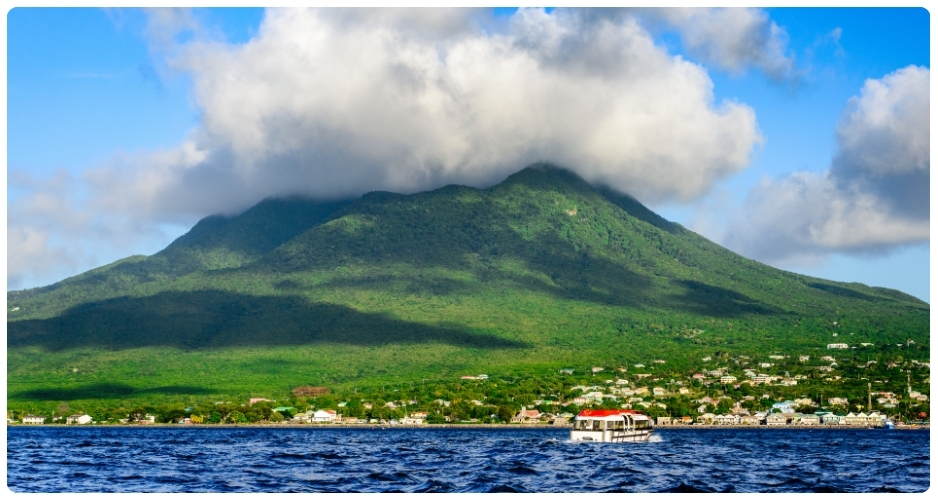
Nevis is a tiny island located in the Caribbean. As one of two islands that make up St. Kitts & Nevis, a federation of those two islands, geographically small, its influence in the global offshore community has grown significantly over the past 30 years.
This was achieved with very little effort – Nevis enacted legislation that made it attractive to international businesses and individuals seeking to structure their wealth. The jurisdiction operates through the legal framework of the Federation of Saint Kitts and Nevis and maintains internationally recognized corporate registration systems. While other offshore jurisdictions have focused primarily on forming corporations, Nevis was especially successful as a jurisdiction when it came to creating asset protection structures.
Why does this matter? Many individuals who use Nevis’s structures do not want to reduce their tax liabilities. Rather, they are seeking ways to manage international risks (i.e., protect themselves against various types of foreign-based claims), separate their assets from each other, make cross-border ownership easier to navigate, and create longer-term legal structures than would exist if they did not take advantage of the protections provided by law in Nevis, so as to avoid being caught up in the increasingly litigious environment that exists globally.
Is Nevis Still Considered a Tax Haven?
Although some individuals refer to Nevis as a "tax haven," technically speaking, this nomenclature may be somewhat inaccurate in describing the current state of affairs regarding taxation. The name "tax haven" is commonly used to refer to Nevis' offshore environment, which imposes no tax by the government of Nevis on locally sourced foreign income earned through properly established offshore entities. This reason alone is why international businesses and investors continue to utilize Nevis.
Additionally, Nevis offshore company does not operate in isolation from the global financial community. Although modern offshore structuring can provide for a high degree of anonymity and confidentiality with respect to financial transactions, it also operates in an environment that is subject to regulation at both the national and international levels.
Banks, corporate service providers, and other financial institutions will typically undertake the following:
- Anti-money laundering (AML) reviews
- Know-your-customer (KYC) verifications
- Verification of beneficial owners
- Analysis of the source of funds
- Compliance monitoring
Therefore, although Nevis continues to offer some degree of privacy and flexibility, it lacks the aspects associated with complete invisibility.
Why Businesses and Investors Still Use Nevis
One issue today regarding the increased rigors of compliance and reporting globally is the continued use of offshore jurisdictions by companies and investors. The reason for this utilization may not simply be as a result of secretive offshore structures; rather, the utilization of an offshore structure can create a clean and organized (legal) and operational environment for foreign business operations.
This can include such issues as:
- Assets held outside their home country
- Operations taking place in various foreign countries
- International investments
- Exposure to liability from foreign transactions
Nevis has a dual attraction due to its unique blend of structural flexibility and legal protections that cannot always be provided by onshore jurisdictions. In addition to being utilized for tax purposes, the primary reasons companies and investors continue to utilize offshore jurisdictions include organizational management and protection of assets through risk segregation, and ultimately, long-term planning.
The Main Advantages of Using Nevis Offshore Structures
There isn’t one single reason people choose Nevis offshore company. Usually, it’s a combination of factors working together.
Strong Asset Protection Laws
Probably, this advantage has had the greatest impact on the recognition of Nevis by the global community.
Nevis law-making bodies have developed the legal system to increase the difficulty of making creditors' claims against Nevis trusts and LLCs.
Some of these asset protection features include:
- The high burden of proof necessary for creditors;
- The short statute of limitations for bringing claims;
- The procedural barriers that exist for creditors (e.g. obtaining evidence);
- Limits on external judgments;
- And charging orders that protect LLC assets from creditors.
While Nevis law-making bodies do not intend to prevent creditors' claims entirely, the result will likely be significant difficulties in pursuing creditors' claims successfully. This is a major difference.
Tax Neutrality
Many describe Nevis as tax-neutral rather than tax-free. In other words, while foreign-sourced income may not be subject to local taxation in Nevis, there are also taxes dependent upon the following:
- Whether or not you are personally resident in Nevis;
- Whether or not your corporate entity is resident in Nevis;
- Where your source of income originates;
- Your obligations to report to the government in Nevis; and
- In some countries, whether your entity qualifies under controlled foreign corporation rules.
Again, like with most things involving offshore planning, the offshore structure itself does not eliminate tax obligations. Instead, what the offshore structure often creates is flexibility for how you organize your international business activity.
Privacy Protections
Privacy is still one aspect of creating an offshore structure. However, unlike before, privacy is more controlled.
In Nevis, certain information about owners of companies registered in Nevis is not publicly available (i.e., searchable) in the same manner that it is in some larger jurisdictions. However, regulators, banks, etc. may still obtain access to such information when permitted by law. That is a far cry from the concept of complete "offshore" secrecy.
Cross-Border Flexibility
Many offshore investors simply want a neutral jurisdiction to operate their businesses. A good example might be:
- Owners located in one country;
- Suppliers based in another;
- Customers distributed around the world;
- Property or assets in yet another location.
When trying to coordinate all of this, using a domestic structure can be quite cumbersome. Nevis is often viewed as a neutral forum for such situations.
The Most Common Offshore Structures in Nevis
In addition to many offshore structures available in Nevis, most individuals use LLCs or trusts to achieve their specific objectives.
Why does the difference matter? Both structures serve legal, operational, and banking purposes; therefore, clients use them as needed when considering an international business structure in Nevis.
Nevis LLCs
Nevis LLCs are among the most common offshore entities being formed at this time due to the combination of the liability protection inherent in corporations and the flexibility of partnerships.
Because of these characteristics, the Nevis LLC has become a very common choice among those establishing international business structures.
Uses for a typical Nevis LLC may be:
- Consultant firms
- Internet companies
- Investment holding
- International trading
- Ownership of intellectual property
- Foreign real estate holding
A number of reasons continue to drive the popularity of Nevis LLCs, including their charging order protections and the limitations imposed upon creditors' remedies when compared to certain onshore jurisdictions.
Why Nevis LLCs Are Popular
| Feature | Practical Benefit |
| Charging order protection | Limits creditor access |
| Flexible ownership | Easier international structuring |
| Tax neutrality | No local tax on foreign income |
| Privacy protections | Reduced public exposure |
| Simple maintenance | Lower admin burden than some jurisdictions |
That said, banking approval still depends heavily on documentation quality and business legitimacy.
A poorly explained Nevis LLC structure can still struggle with compliance onboarding.
Nevis Trusts
Nevis trusts have been most famously associated with;
- Long-term wealth planning
- Estate planning
- Asset protection
- Succession structuring
As opposed to LLCs, trust companies are usually far less concerned with the day-to-day operations of a company than with separating ownership from operation and creating a longer-term plan.
It was the way creditor claims were addressed that created international attention for Nevis Trusts.
For many, creditors will be subject to:
- Strict filing deadlines
- Higher evidentiary standards
- Procedural restrictions
- Possible bond requirements before claims proceed
This collective body of law creates a legal burden on creditors in claiming against assets located in Nevis, which is often more severe than that experienced by claimants in other jurisdictions.
How Nevis Compares to Other Offshore Jurisdictions
Nevis is often compared with places like the BVI, Belize, the Cayman Islands, or Seychelles. But each jurisdiction tends to specialize in slightly different things.
| Jurisdiction | Best Known For | Banking Reputation | Asset Protection | Cost Level |
| Nevis | Asset protection | Moderate | Very strong | Medium |
| BVI | Corporate structuring | Strong | Moderate | Medium-high |
| Belize | Low-cost offshore | Mixed | Moderate | Lower |
| Cayman Islands | Investment funds | Very strong | Strong | High |
| Seychelles | Fast incorporations | Mixed | Moderate | Lower |
This is why choosing an offshore jurisdiction based purely on price is often shortsighted.
The cheapest setup is not always the structure that works best in the long term.
How Offshore Banking Has Changed
There are still many common misconceptions about how easy it is to open an offshore bank account. In fact, banking has become one of the most difficult aspects of setting up your offshore structure.
Banks today are extremely interested in all of the following:
- Your source of income
- The origin of your wealth
- What type of business you run
- Consistency in transactions
- Whether there is an actual "substance" (operation) behind the entity
- Transparency regarding tax information
- Rsk associated with the country/jurisdiction
Therefore, a cheap Nevis offshore company setup with little or no documentation will generally lead to future banking issues. Many of the banking issues are more related to poor structuring/ownership, lack of clear explanation for transactions, unrealistic transaction patterns, lack of supporting documentation etc., as opposed to specific characteristics of the jurisdiction itself. That is why it is even more important to focus on creating high-quality structures today, versus relying on exaggerated offshore marketing.
How Nevis Fits Into Modern Compliance Systems
It's no longer possible for an offshore jurisdiction to stand on its own in terms of compliance with other countries' laws and regulations.
Nevis Structures still fit into larger international regulatory systems, some of which we’ll discuss below.
CRS and Financial Reporting
Offshore structures have banks that report to their home country under automatic exchange agreements, such as the OECD Common Reporting Standard (CRS) and financial reporting or similar international standards.
The idea behind CRS is that participating countries will automatically share bank account holder information among tax authorities. In reality, offshore banking isn't always private.
AML and KYC Requirements
Banks and financial institutions continue to implement FATF-recommended AML and compliance procedures:
- Beneficial owner identification
- Identification of the source of funds
- Continuing transactions
All of these elements help explain why there has been a shift towards creating "compliance-based" offshore plans instead of "secrecy-based" plans.
Who Typically Uses Nevis Structures?
Typically, individuals who use Nevis structures are far less "ultra-wealthy" than they are typically portrayed as in the media. They may be:
- Entrepreneurs
- Business people with international online operations
- People with assets in multiple countries (who wish to protect these)
- Consultants or other professionals who work outside their home country
- High-risk individuals/employees (e.g., doctors)
- People creating trusts for family estate planning purposes
- Litigation-exposed individuals/employees.
What Nevis Does NOT Do
Offshore marketing has created so much misinformation that there needs to be a clear explanation about what Nevis offshore companies do NOT do.
When you use offshore companies, your tax burden may decrease, but you will still have some type of obligation or liability for taxes in your home country.
Nevis does not:
- Eliminate all taxes automatically
- Guarantee your bank accounts will be approved by your bank
- Guarantee anonymity or complete invisibility (see “Reporting” below)
- Make sure money transfers done through a trust company are legitimate
- Remove reporting requirements
- Override the tax laws of your home country
Most people run into trouble with their offshore plans when they expect something that no longer exists. The idea of offshore planning is typically boring, well-documented, and compliant with legal standards. That's how it works.
Common Mistakes People Make With Nevis Structures
Most people who use an offshore company in Nevis will encounter issues, but those issues are usually not caused by Nevis's laws or regulations. Instead, they usually arise because of how you handle your offshore entity after it has been incorporated.
There are several common mistakes made when using an offshore entity in Nevis, such as:
- Viewing offshore incorporation as a "one-shot" deal rather than something that requires ongoing compliance;
- Commingling personal and business financial transactions;
- Overlooking the continuing reporting obligation of your company;
- Using entities solely based on low costs without considering other factors such as tax implications or banking issues;
- Not planning for your banking needs prior to incorporating your offshore entity;
- Incorrectly understanding what constitutes beneficial owner(s) for your company;
- Thinking that if your entity provides privacy, then this necessarily means your private information will be secret.
While some of these errors may create no immediate problems, they generally become apparent at future times. For example:
- When you have banking reviews performed;
- During tax audit's;
- As part of large transactions;
- Or upon review for compliance purposes;
- And/or transfer money across international borders.
How Offshore Structuring Has Changed in 2026
The modern version of offshore structuring is based on legal efficiency, international organization, liability separation, cross-border operations, and long-term planning, as well as compliance, sustainability, and the ability to operate transparently within the system rather than avoid regulation.
This means that the best modern offshore structures tend to operate within a transparent framework. Therefore, the need for secrecy has decreased.
Information can now flow freely.
Summary
Nevis continues to be recognized as one of the foremost offshore jurisdictions due to its ability to provide a relatively rare set of commodities in today's global economic structuring environment: asset protection laws, tax neutrality, flexibility in legal structures, and an established infrastructure for offshore planning within the global financial system.
However, international structuring through offshore planning has dramatically changed. Today’s Nevis offshore structure is no longer about evading regulations or hiding ownership. The use of Nevis structures is subject to progressively stricter banking compliance reporting regulations. Ultimately, whether a Nevis structure is successful will depend on how it is constructed, documented, maintained, and remains compliant with international regulatory expectations over time.
