St. Kitts and Nevis has been offering citizenship-by-investment to foreigners since 1984. Its passport program is the oldest one currently available on the global market. It is also considered a trendsetter: the innovations introduced by the islanders are quickly adopted by other Caribbean countries as well as nations beyond the region. However, a bill is being submitted to Parliament that will tighten the requirements for those seeking a St. Kitts passport.
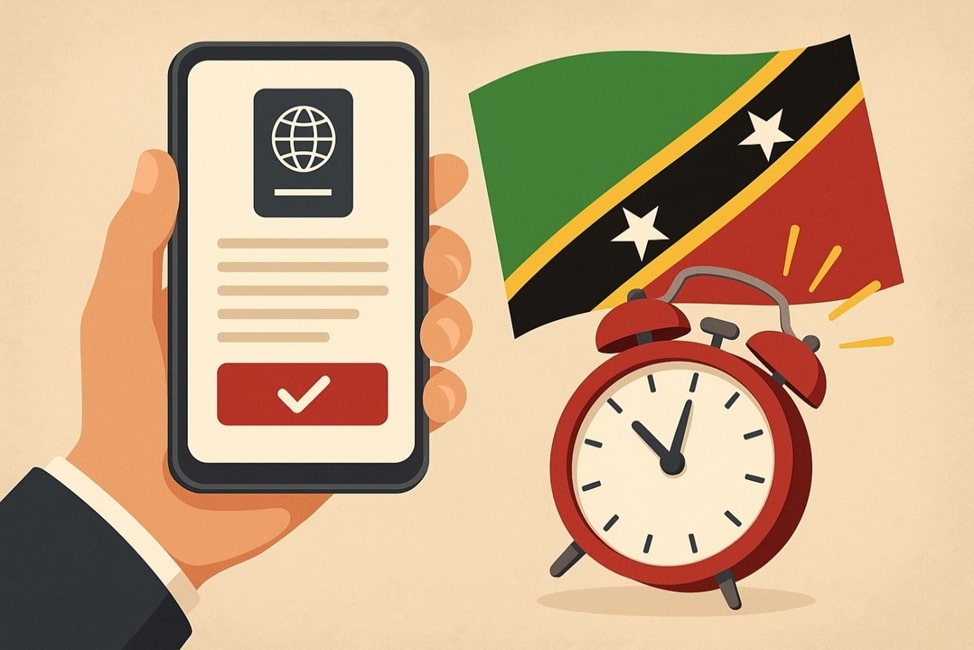
Unsurprisingly, the news about the introduction of mandatory residency for obtaining St. Kitts' “golden passports” caused a stir. After all, the service had been offered remotely for decades. It is quite possible that other Caribbean and non-Caribbean jurisdictions will follow suit, so it’s worth keeping an eye on developments.
New Bill: Residency and Biometrics
According to Prime Minister Terrance Drew, the government of St. Kitts will submit to Parliament in the coming weeks a bill that will significantly change the requirements for all future citizenship applicants.
Key points:
- Mandatory residency: All applicants will be required to spend time in the country or otherwise prove a genuine connection to St. Kitts. Details have not yet been disclosed. A minimal physical presence requirement is under discussion — likely between 30 and 90 days annually.
- Biometric verification: Fingerprints will be required. The collection and storage of data will follow international standards.
These measures align with the requirements of the European Commission and the recommendations of the International Organization for Migration. Previously, the island had already introduced mandatory interviews for applicants. This required interviews to be conducted either in person or via video conference using enhanced identification mechanisms.
Pressure from the U.S. and EU
These changes are taking place amid pressure from the EU and the U.S., as well as other external and internal forces. In particular, there is increasing criticism from the local opposition and independent international organizations, including Transparency International, which accuse the country of “selling citizenship.”
EU officials are threatening their Caribbean partners with the suspension of visa-free access to the Schengen Area and stricter consular oversight. On June 17, 2025, the European Commission, the European Parliament, and the Council of the EU agreed on an update to the visa waiver suspension mechanism, making it faster, tougher, and more flexible. Benefits can now be temporarily revoked not only due to a surge in migration, security threats, or refusal to accept deported individuals, but also if an investment citizenship scheme is in place.
In the second half of June, reputable American media reported that the White House may impose visa sanctions on third countries, including St. Kitts. The legal basis for this is Executive Order 14161, signed by Donald Trump, as part of the broader immigration restrictions.
These are the grounds for imposing sanctions on St. Kitts:
- The existence of an economic citizenship scheme without physical presence or residency requirements;
- The issuance of passports to nationals of third countries under U.S. sanctions (e.g., citizens of Iran and Russia).
Official Position and Additional Measures
Over the decades, the passport scheme has allowed the island nation to attract billions of dollars and become a key source of budget revenue. It’s not surprising that the government wants to preserve the program by introducing new safeguards. Furthermore, Prime Minister Drew emphasized that the new model is not a concession to external pressure. The reforms, he said, had long been planned and are aimed at restoring confidence in the program.
Improving Transparency
Previously, the scheme was heavily criticized for being secretive and opaque. The former government refused to disclose data on the number of new citizens. The new Cabinet has started publishing these statistics. For example, in 2022, around 3,000 passports were issued to investors and their family members. In 2023 — 2,400.
Here are the top countries of origin of applicants (in descending order):
- China
- Russia
- Iran
- Nigeria
- India
Implementation of eTA
Since December 2023, the country has been implementing an Electronic Travel Authorization (eTA) system to monitor travelers. Its launch is scheduled for the second half of 2025. The system is expected to integrate with a global biometric database, which will simplify the fight against illegal migration.
Readmission
Commenting on U.S. pressure, the Prime Minister noted that St. Kitts reliably accepts all deported nationals. In the first five months of 2025, the country received nine such individuals, all deported from the U.S. The most common grounds for deportation are expired visas and non-criminal offenses.
Regional Cooperation: Establishing a Supranational Regulator
At a recent meeting of the heads of state of the Eastern Caribbean Currency Union (ECCU), a landmark decision was taken to create a regional regulator for citizenship-by-investment programs. The organization will be modeled after the Eastern Caribbean Central Bank (ECCB). Objectives:
- Harmonizing eligibility requirements;
- Joint development of KYC/AML standards and due diligence procedures;
- Unifying pricing policy.
Last Chance to Use Old Terms: The “Window of Opportunity” Is Closing
Immigration lawyers emphasize that only a few weeks (or at best, months) remain before the new rules come into force. Applicants who wish to obtain citizenship under the current rules should submit their applications as soon as possible
| Option | Minimum Amount | Notes |
|---|---|---|
| Donation | 250,000 USD + administrative fees | Non-refundable contribution to the Sustainable Growth Fund |
| Real Estate Investment (3–7% yield) | 325,000 USD + fees | Shares in approved projects, including Royal St. Kitts Hotel. Resale (exit from investment) after 7 years |
Applications are typically processed within 45 to 90 days. Expedited options are available for an additional fee.
What’s Next: Reducing Reliance on the Passport Program and a New Development Model
The government acknowledges that the previous model, where 70% of the budget was covered by “golden passport” revenues, posed significant strategic risks. In response, a large-scale diversification program has been launched.
Main Areas:
- Agriculture: Transition from imported food to local production.
- Tourism and yachting infrastructure: The Safe Harbor project will allow the country to become one of the leading marina operators. Focus on new hotels from international brands without passport scheme funding.
- Education and social infrastructure: Construction of new secondary schools. Healthcare modernization with support from Cuban specialists.
- Water and energy supply: Joint projects with Taiwan and Saudi Arabia. Implementation of sustainable water supply programs.
Conclusion
The introduction of a residency requirement will objectively make the St. Kitts program less attractive. But it is unlikely that this will remain an isolated case. Other jurisdictions will have to choose: either voluntarily adapt to the new reality or face international isolation. St. Kitts has shown that reform is possible, however.. The question is — who’s next?
